Thank you all for your attention and engagement with our guest speakers in class. We do have many more coming in during the course of the semester, so the question begs, "Why all these guest speakers?"
Reason 1: Internationalize
Let's go back to the original idea of the class. We're trying to learn about global agricultural education in its many forms across the globe. How can we do that without traveling? One of the strategies to accomplish our learning goals is to invite in guest speakers, many of them from the Penn State community, to share their global experiences.
Yesterday we heard from a student's perspective about Zamorano University in Honduras. It's hard to imagine an ag university where you get a demerit for walking on the grass, or where you have to wear a uniform at all times. By inviting Loren in, we get to glimpse into the world of Zamorano without having to travel there.
Reason 2: Real Life Examples
We spent much of the first part of the semester learning about agriculture, education and agricultural education. We also looked at diffusion of innovations and many different barriers to receiving an agricultural education - gender, location, literacy, race, language, etc. The idea behind examining real-life examples is to go from our abstract classroom knowledge and apply it to real-life situations.
For example, we had Blaze Currie here from Agricorps. Many of you asked poignant questions about the program i.e, "Is a year long enough?" and "Is language a barrier?" These are great questions that really showcase the decisions that have to be made in real life. Perhaps a longer time would be better, but then no one would sign up. And sure, technically the official language is English, but other tribal languages may also be spoken.
It's a long way from the critical world of academia to a small school in rural Liberia. How does a program such as Agricorps balance what they know in the abstract with what they think will work in real life?
Reason 3: Context
I think it is easy to sit in a classroom at Penn State and say that "culture" is a reason why some programs work and other programs don't work. It's actually very shaky ground to "blame"culture, especially when talking about underdevelopment. That's a viewpoint that was very popular in development work in the 1950s and 1960s, and has since been recognized as very damaging.
Bringing in a guest speaker can help us to understand the unique cultural context of different places. For example, we had Dr. Nicole Webster come in yesterday to talk with us about her Fulbright experience developing a student organization at UNICA in Nicaragua. After learning about how the lingering effects of the Sandinistas on Nicaragua, it was easy to see why student organizations were not a part of the culture of UNICA or any other university in the country. This is a fabulous example of why context matters. It would have been very easy to blame the lack of student organizations on culture, but really there is an underlying historical rationale that makes a lot of sense.
Why is this knowledge useful? Well, if you wanted to bust into Nicaragua and start an FFA organization or 4-H Club you would certainly want to know about the context before you got started. Dr. Webster's example provides us with the idea that you might have to dig deep to find the answers - history and politics, in this case.
Let's use the information presented by our guest speakers to our best advantage. Think about the elements of the programs our speakers talk about in terms of what you've read and learned about in this class.
Remember that this class is not just about critiquing examples, but it is also about building. We hope to create positive change agents, so we strive to provide you with some real-life examples of programs that "work".
Showing posts with label Dispositions. Show all posts
Showing posts with label Dispositions. Show all posts
Wednesday, February 19, 2014

Thursday, February 13, 2014
Wait...Why do these Ticket Out things again?
Hello!
 I mentioned in class that the Ticket Out process is a small learning process that I try to use in order to cultivate a "Growth Mindset" in students. I mentioned I picked this up from reading a book by Carol Dweck called "Mindset" that was provided to me at the National Agriscience Integration Institute by DuPont (Thanks!)
You read more about how I explain it to another class here:http://psuaee412.blogspot.com/2013/08/a-growth-mindset-in-preparation-for-day.html
Below is a great video that was just shared with me that in 1 minute describes the difference between a Growth vs Fixed Mindset. What kind of mindset do we want to cultivate a positive agents of change in global agricultural education?
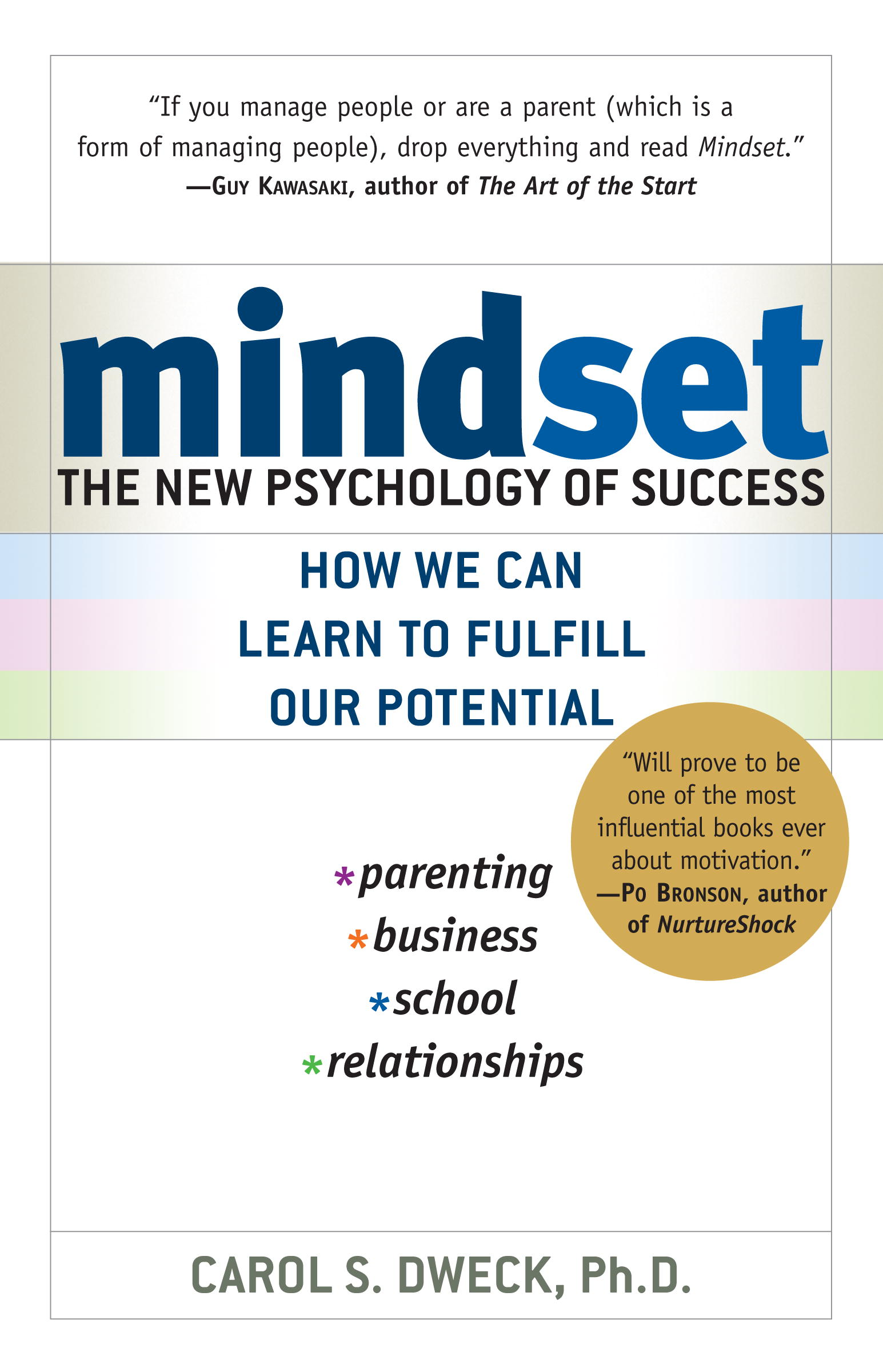 I mentioned in class that the Ticket Out process is a small learning process that I try to use in order to cultivate a "Growth Mindset" in students. I mentioned I picked this up from reading a book by Carol Dweck called "Mindset" that was provided to me at the National Agriscience Integration Institute by DuPont (Thanks!)
You read more about how I explain it to another class here:http://psuaee412.blogspot.com/2013/08/a-growth-mindset-in-preparation-for-day.html
Below is a great video that was just shared with me that in 1 minute describes the difference between a Growth vs Fixed Mindset. What kind of mindset do we want to cultivate a positive agents of change in global agricultural education?
Thursday, January 30, 2014
But...I still have questions!
We are now in the third week of the semester. As instructors, we've challenged you to actually read the assigned readings before coming to class. We ask this so you come to class with a basic understanding of the content, which leaves us the freedom to engage with the content at higher cognitive levels in the classroom.
We don't just want you to know the material, but we want you to be able to discuss it, analyze it and synthesize it. These higher cognitive functions are so much more challenging to your brain than simple lecture and hours of PowerPoint presentations.
In essence, this class is about YOU learning the material, not the instructors demonstrating that they can drone on for hours about the material. That's called student-centered!
It can be uncomfortable at times because not many classes are run this way. Isn't that funny? Most classrooms are not student-centered. It seems kind of backward to me, because aren't classes supposed to be focused on students learning something...?
It has come to my attention that some students might be unsettled when they leave class. After doing the readings and engaging with the content students might not feel that they "know" the material.
So, in our student-focused class, we turn the onus of responsibility back on you. Reread the readings, look at the additional resources we tweet, and or pay us a visit to follow-up with us on anything you have questions about. Ignite your inner desire to know more and act on it!
We don't just want you to know the material, but we want you to be able to discuss it, analyze it and synthesize it. These higher cognitive functions are so much more challenging to your brain than simple lecture and hours of PowerPoint presentations.
In essence, this class is about YOU learning the material, not the instructors demonstrating that they can drone on for hours about the material. That's called student-centered!
It can be uncomfortable at times because not many classes are run this way. Isn't that funny? Most classrooms are not student-centered. It seems kind of backward to me, because aren't classes supposed to be focused on students learning something...?
It has come to my attention that some students might be unsettled when they leave class. After doing the readings and engaging with the content students might not feel that they "know" the material.
So, in our student-focused class, we turn the onus of responsibility back on you. Reread the readings, look at the additional resources we tweet, and or pay us a visit to follow-up with us on anything you have questions about. Ignite your inner desire to know more and act on it!
Wednesday, January 22, 2014
Seven Characteristics of Good Learners
Hello all!
I was reflecting on the bus ride about AEE 400 and the trajectory the course is taking.My observation is that not everyone perhaps is comfortable with the format of the course yet (no doubt, we will all acclimate).
A fundamental philosophical foundation that we took when designing this course is while there are concepts that can be engaged in there is no one "right" answer when dealing with our course themes and for this course to have true value, each learner will have to actively engage in constructing their own meaning.
In order to accomplish the goal of "engaging" with the material and peers to construct meaning, each learner must come to class prepared by having completing the reading that was provided to provide context. This allows us to go deeper and really start creating individual meaning. It is not an effective use of time for us to come to class and "lecture" at you about the reading...we would be greatly hindering our chance and true learning if that was the case because the issues we are grappling with are dynamic and ever-changing, not static that can be learned from a book alone.
In my email this morning, I received a blog entry from Dr. Maryellen Weimer that I thought I would share those with you to get your feedback. Of course, as instructors we are committed to being "good learners" as well.
I was reflecting on the bus ride about AEE 400 and the trajectory the course is taking.My observation is that not everyone perhaps is comfortable with the format of the course yet (no doubt, we will all acclimate).
A fundamental philosophical foundation that we took when designing this course is while there are concepts that can be engaged in there is no one "right" answer when dealing with our course themes and for this course to have true value, each learner will have to actively engage in constructing their own meaning.
In order to accomplish the goal of "engaging" with the material and peers to construct meaning, each learner must come to class prepared by having completing the reading that was provided to provide context. This allows us to go deeper and really start creating individual meaning. It is not an effective use of time for us to come to class and "lecture" at you about the reading...we would be greatly hindering our chance and true learning if that was the case because the issues we are grappling with are dynamic and ever-changing, not static that can be learned from a book alone.
In my email this morning, I received a blog entry from Dr. Maryellen Weimer that I thought I would share those with you to get your feedback. Of course, as instructors we are committed to being "good learners" as well.
SEVEN CHARACTERISTICS OF GOOD LEARNERS
1.
Good
learners are curious
– They wonder about all sorts of things, often about things way beyond their
areas of expertise. They love the discovery part of learning. Finding out about
something they didn't know satisfies them for the moment, but their curiosity
is addictive.
2.
Good
learners pursue understanding diligently – A few things may come easily to learners but most knowledge
arrives after effort, and good learners are willing to put in the time. They
search out information—sometimes aspiring to find out everything that is known
about something. They read, analyze, and evaluate the information they've
found. They talk with others, read more, study more, and carry around what they
don't understand; thinking about it before they go to sleep, at the gym, on the
way to work, and sometimes when they should be listening to others. Good
learners are persistent. They don't give up easily.
3.
Good
learners recognize that a lot of learning isn't fun – That doesn't change how much they love
learning. When understanding finally comes, when they get it, when all the
pieces fit together, that is one special thrill. But the journey to
understanding generally isn't all that exciting. Some learning tasks require
boring repetition; others a mind-numbing attention to detail; still others
periods of intense mental focus. Backs hurt, bottoms get tired, the clutter on
the desk expands, the coffee tastes stale—no, most learning isn't fun.
4.
Failure
frightens good learners, but they know it's beneficial – It's a part of learning that offers special
opportunities that aren't there when success comes quickly and without failure.
In the presence of repeated failure and seeming futility, good learners carry
on, confident that they'll figure it out. When faced with a motor that resists
repair, my live-in mechanic announces he has yet to meet a motor that can't be
fixed. Sometimes it ends up looking like a grudge match, man against the
machine, with the man undeterred by how many different fixes don't work. He's
frustrated but determined to find the one that will, all the while learning
from those that don't.
5.
Good
learners make knowledge their own – This is about making the new knowledge fit with what the
learner already knows, not making it mean whatever the learner wants. Good
learners change their knowledge structures in order to accommodate what they
are learning. They use the new knowledge to tear down what's poorly
constructed, to finish what's only partially built, and to create new
additions. In the process, they build a bigger and better knowledge structure.
It's not enough to just take in new knowledge. It has to make sense, to connect
in meaningful ways with what the learner already knows.
6.
Good
learners never run out of questions – There's always more to know. Good learners are never
satisfied with how much they know about anything. They are pulled around by
questions—the ones they still can't answer, or can only answer part way, or the
ones without very good answers. Those questions follow them around like day
follows night with the answer bringing daylight but the next question revealing
the darkness.
7.
Good
learners share what they've learned – Knowledge is inert. Unless it's passed on, knowledge is lost.
Good learners are teachers committed to sharing with others what they've
learned. They write about it, and talk about it. Good learners can explain what
they know in ways that make sense to others. They aren't trapped by specialized
language. They can translate, paraphrase, and find examples that make what they
know meaningful to other learners. They are connected to the knowledge passed
on to them and committed to leaving what they've learned with others.
Subscribe to:
Posts (Atom)