Thank you all for your attention and engagement with our guest speakers in class. We do have many more coming in during the course of the semester, so the question begs, "Why all these guest speakers?"
Reason 1: Internationalize
Let's go back to the original idea of the class. We're trying to learn about global agricultural education in its many forms across the globe. How can we do that without traveling? One of the strategies to accomplish our learning goals is to invite in guest speakers, many of them from the Penn State community, to share their global experiences.
Yesterday we heard from a student's perspective about Zamorano University in Honduras. It's hard to imagine an ag university where you get a demerit for walking on the grass, or where you have to wear a uniform at all times. By inviting Loren in, we get to glimpse into the world of Zamorano without having to travel there.
Reason 2: Real Life Examples
We spent much of the first part of the semester learning about agriculture, education and agricultural education. We also looked at diffusion of innovations and many different barriers to receiving an agricultural education - gender, location, literacy, race, language, etc. The idea behind examining real-life examples is to go from our abstract classroom knowledge and apply it to real-life situations.
For example, we had Blaze Currie here from Agricorps. Many of you asked poignant questions about the program i.e, "Is a year long enough?" and "Is language a barrier?" These are great questions that really showcase the decisions that have to be made in real life. Perhaps a longer time would be better, but then no one would sign up. And sure, technically the official language is English, but other tribal languages may also be spoken.
It's a long way from the critical world of academia to a small school in rural Liberia. How does a program such as Agricorps balance what they know in the abstract with what they think will work in real life?
Reason 3: Context
I think it is easy to sit in a classroom at Penn State and say that "culture" is a reason why some programs work and other programs don't work. It's actually very shaky ground to "blame"culture, especially when talking about underdevelopment. That's a viewpoint that was very popular in development work in the 1950s and 1960s, and has since been recognized as very damaging.
Bringing in a guest speaker can help us to understand the unique cultural context of different places. For example, we had Dr. Nicole Webster come in yesterday to talk with us about her Fulbright experience developing a student organization at UNICA in Nicaragua. After learning about how the lingering effects of the Sandinistas on Nicaragua, it was easy to see why student organizations were not a part of the culture of UNICA or any other university in the country. This is a fabulous example of why context matters. It would have been very easy to blame the lack of student organizations on culture, but really there is an underlying historical rationale that makes a lot of sense.
Why is this knowledge useful? Well, if you wanted to bust into Nicaragua and start an FFA organization or 4-H Club you would certainly want to know about the context before you got started. Dr. Webster's example provides us with the idea that you might have to dig deep to find the answers - history and politics, in this case.
Let's use the information presented by our guest speakers to our best advantage. Think about the elements of the programs our speakers talk about in terms of what you've read and learned about in this class.
Remember that this class is not just about critiquing examples, but it is also about building. We hope to create positive change agents, so we strive to provide you with some real-life examples of programs that "work".
Showing posts with label Supplemental Instruction. Show all posts
Showing posts with label Supplemental Instruction. Show all posts
Wednesday, February 19, 2014

Thursday, February 13, 2014
Wait...Why do these Ticket Out things again?
Hello!
 I mentioned in class that the Ticket Out process is a small learning process that I try to use in order to cultivate a "Growth Mindset" in students. I mentioned I picked this up from reading a book by Carol Dweck called "Mindset" that was provided to me at the National Agriscience Integration Institute by DuPont (Thanks!)
You read more about how I explain it to another class here:http://psuaee412.blogspot.com/2013/08/a-growth-mindset-in-preparation-for-day.html
Below is a great video that was just shared with me that in 1 minute describes the difference between a Growth vs Fixed Mindset. What kind of mindset do we want to cultivate a positive agents of change in global agricultural education?
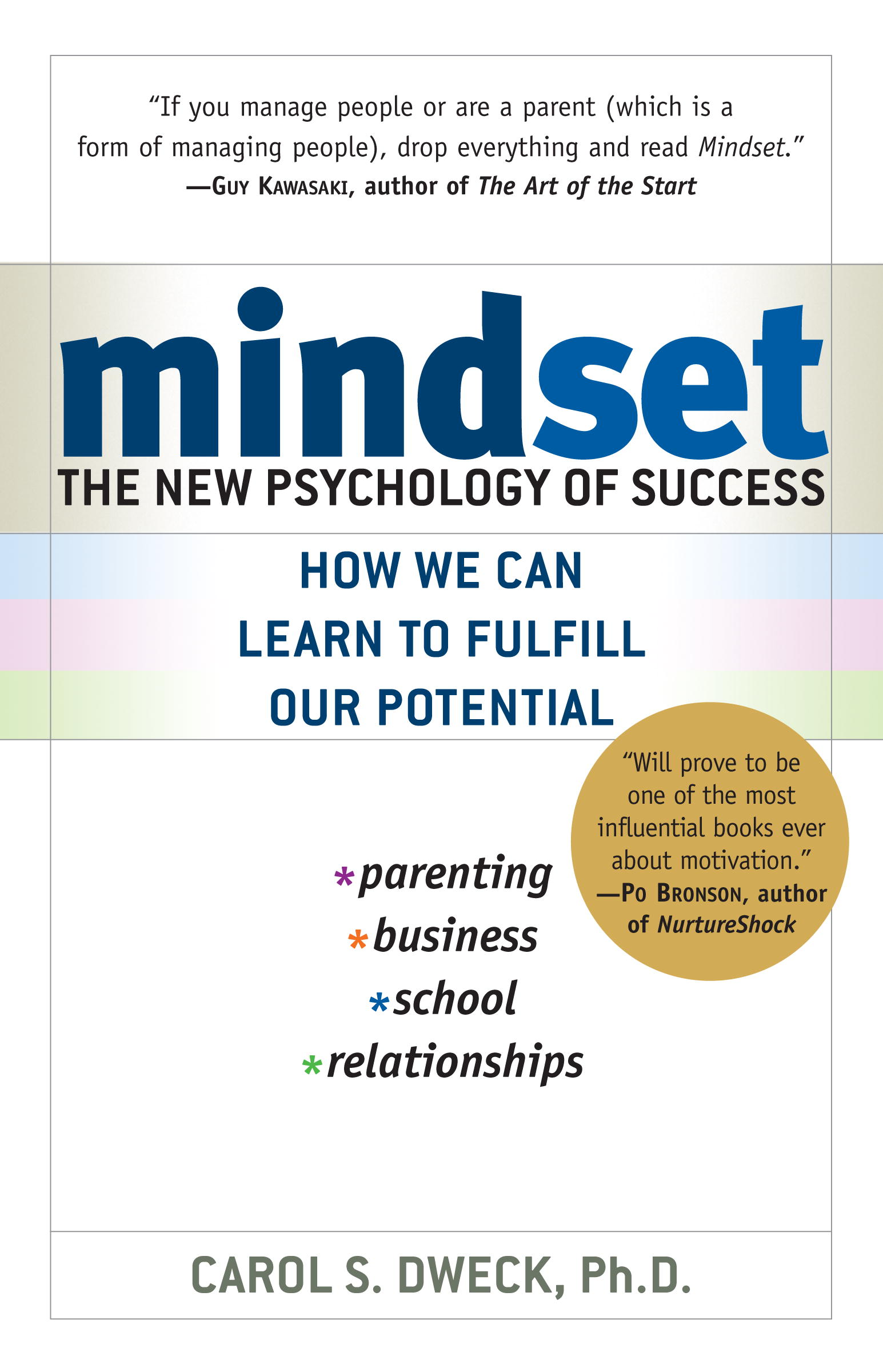 I mentioned in class that the Ticket Out process is a small learning process that I try to use in order to cultivate a "Growth Mindset" in students. I mentioned I picked this up from reading a book by Carol Dweck called "Mindset" that was provided to me at the National Agriscience Integration Institute by DuPont (Thanks!)
You read more about how I explain it to another class here:http://psuaee412.blogspot.com/2013/08/a-growth-mindset-in-preparation-for-day.html
Below is a great video that was just shared with me that in 1 minute describes the difference between a Growth vs Fixed Mindset. What kind of mindset do we want to cultivate a positive agents of change in global agricultural education?
Friday, February 7, 2014
Questions to think about as you read Pingali's speech
As part of your reading for Tuesday's class we ask you to read a speech by Prabhu Pingali titled "Who is the Smallholder Farmer?" from the 2010 Borlaug Dialogue hosted by the World Food Prize. You can either read the speech, or watch this video of it on Youtube (it isn't the best quality).
Here are a few questions to think about as you read:
The World Food Prize hosts an annual event called the Borlaug Dialogue, presented in honor and memory of Norman Borlaug. This is an event that brings together stakeholders from all walks of life from CEOs of multi-national companies to smallholder farmers from Africa to discuss issues related to food security and international development. I mention this event specifically because each year two scholarships to attend the event are offered to students enrolled in the INTAG minor. If you'd like to learn more about the event, I refer you to your classmate Jenna, who has attended in the past and worked with the World Food Prize organization. I'm also happy to let you know more details about the event and the INTAG scholarship.
Here are a few questions to think about as you read:
- Pingali mentions several misconceptions about the role of smallholder famers. What are they? Are there others you can think of?
- What are the conditions to enhancing smallholder productivity that Pingali notes in his speech. Can you think of others?
- Based on what we’ve studied previously in this class, why is it important to care about smallholder farmers?
The World Food Prize hosts an annual event called the Borlaug Dialogue, presented in honor and memory of Norman Borlaug. This is an event that brings together stakeholders from all walks of life from CEOs of multi-national companies to smallholder farmers from Africa to discuss issues related to food security and international development. I mention this event specifically because each year two scholarships to attend the event are offered to students enrolled in the INTAG minor. If you'd like to learn more about the event, I refer you to your classmate Jenna, who has attended in the past and worked with the World Food Prize organization. I'm also happy to let you know more details about the event and the INTAG scholarship.
Thursday, February 6, 2014
Barriers to Accessing Education
What
are other barriers to accessing an education, or if you would like to be more
specific, accessing an education in agriculture?
Discuss with your classmates, research online, look at past readings to identify an additional barrier to accessing education or agricultural education. Select one barrier and be prepared to share the following in class on Tuesday:
Discuss with your classmates, research online, look at past readings to identify an additional barrier to accessing education or agricultural education. Select one barrier and be prepared to share the following in class on Tuesday:
- What is the barrier?
- What are characteristics of the barrier?
- Where is the barrier prevalent in the world?
- What are suggested strategies for overcoming the barrier?
- Cite one resource in APA style that supports your finding.
Wednesday, February 5, 2014
The Gender Barrier - Additional Resources
Interested in exploring differences in educational opportunity and job placement between men and women? Here are some great resources to get you started:
- Half the Sky There is a movement around the Kristof and WuDunn book "Half the Sky", from which one of our required readings was taken. It's a great place to start if you are new to women's studies. Read the rest of the book, watch the movie and learn more about the organizations working to improve the status of women around the world.
- Take a class in women's studies - CED 420 Women in Developing Countries - is offered each spring.
- Join Triota, the women's study club. You do not have to be a women's studies major or minor!
- Interested in learning more about gender disparities in the US? Check out the growing "Lean In" movement headed by Facebook CFO Sheryl Sandberg.
- Read the research Use the PSU Library to look up additional research articles in countries and regions that interest you. It's a hot topic and there are many articles available on many different facets of educational opportunity and job placement.
- What are key organizations working in this area? How is the U.S. government contributing? Here's an example of how the U.S. (via the Feed the Future program) is helping women farmers in Ghana. Getting to know key organizations and staying updated on their programs is a good first step toward a career in this area.
- Watch a TED Talk The TED stage is known for innovative talks on relevant subjects. Use the search field to find talks related to gender issues around the world. I like this one from Manal al-Sherif, a Saudia Arabian woman who dared to learn how to drive.
Gender and AET
Here are the discussion questions from today's class:
- What does the proverb “Women hold
up half the sky” mean? Do you agree? Can you tie this idea back to the notion of
workforce development?
-
Why is it so difficult to empower girls
and women?
-
What is gender parity?
-
Why are there gender differences in
AET around the world? Do these
differences exist in the US?
- What are some strategies to overcome gender barriers in AET?
Tuesday, February 4, 2014
Researching a Source
Remember that for Thursday's class we ask you to research a source cited in the reading "Gender, Higher Education and AET". Locate and read the article, and fill out the questions on the handout. If you need an extra copy of the handout, look in ANGEL under "Course Session Materials".
Be prepared to share your findings on Thursday!
Be prepared to share your findings on Thursday!
Friday, January 31, 2014
Youth Engagement in Economic Opportunities within Rural Areas
Webinar hosted by Making Cents International on "Youth Engagement in Economic Opportunities within Rural Areas".
DATE: Tuesday, Feb. 4, 2014, 10-11 AM EST
RSVP
& MORE INFO: http://j.mp/1fFs6LF
WEBINAR
SPEAKER(S):
ABOUT
THE WEBINAR:
Today’s unprecedented high youth population presents the challenge of creating
constructive career paths for millions of people born into rural poverty, but
it also presents the opportunity of leveraging human resources to address a
major global challenge: food security. How can we engage young people in
agricultural and/or rural development efforts in ways that present a viable
future for them and contribute to food security? Many young people want to
leave the farm, but where will they go and who will be tomorrow’s farmers? What
other rural development work can offer opportunities to young people, and
benefit from their contribution? What are young people themselves saying? Join
Steve Cumming (Program Manager of Youth Learning at the MasterCard Foundation),
Mary McVay, (Founder, Enterprise Development Kiosk), and Simeon Ogonda
(Co-Founder, Spring Break Kenya) for this in-depth conversation that will
address these and other pressing questions, while providing you with practical
guidance to inform your work.
DATE: Tuesday, Feb. 4, 2014, 10-11 AM EST
Steve
Cumming (Program Manager of Youth Learning at the MasterCard Foundation)
Mary
McVay, (Founder, Enterprise Development Kiosk)
Simeon
Ogonda (Co-Founder, Spring Break Kenya)
Additional Resources
This week we are wrapping up the first course theme: Education as Innovation, where we explored the notions of diffusion, the effects of education, and the special contribution of agriculture to development. We'll be moving into Access to Education and Employment, which focuses on the barriers to accessing quality education and employment.
Have lingering questions about poverty, education and agricultural development? Want to learn more about diffusion of innovations? Curious to learn more about the barriers to education and employment?
I encourage you to spend some time with the books from which we pulled our select class readings. These resources address other facets of poverty and development that are outside the purview of this course. Additionally, seriously consider reading Rogers' entire Diffusion of Innovations and spend some time looking at current and historical studies that have utilized this model.
I also recommend the work of Amartya Sen, a Nobel Prize winner who writes about famine, poverty, health and education in the developing world from a very unique viewpoint.
Also, an alternative way of learning more about these issues is to look at the open course (MOOC) offered by MIT on global poverty. It's just like attending a class - you get a syllabus, the required readings, assignments and exams and then you can watch videos of the course lectures. The course I've linked to is actually taught by Banerjee and Duflo, two of the authors from our course readings and who are also world-renown development economists. MIT also offers several other open courses that you might be interested in such as sustainable development, food security and development policy.
Finally, challenge yourself to connect with at least three organizations or key individuals that are working within these subject areas. Visit their websites, learn about their strategies, identify their sources of funding, and stay updated on their activities via social media or newsletter updates.
Have lingering questions about poverty, education and agricultural development? Want to learn more about diffusion of innovations? Curious to learn more about the barriers to education and employment?
I encourage you to spend some time with the books from which we pulled our select class readings. These resources address other facets of poverty and development that are outside the purview of this course. Additionally, seriously consider reading Rogers' entire Diffusion of Innovations and spend some time looking at current and historical studies that have utilized this model.
- Banerjee, A. V., Benabou, R., Mookherjee, D., & Case, A. (2006). Understanding poverty. Oxford: Oxford University Press. ISBN: 9780195305203.
- Banerjee, A. V., & Duflo, E. (2011). Poor economics: a radical rethinking of the way to fight global poverty. New York: PublicAffairs. ISBN: 9781586487980.
- Rogers, E. M. (2003). Diffusion of innovations 5th ed. New York: Free Press. Chapter one available on ANGEL.
I also recommend the work of Amartya Sen, a Nobel Prize winner who writes about famine, poverty, health and education in the developing world from a very unique viewpoint.
Also, an alternative way of learning more about these issues is to look at the open course (MOOC) offered by MIT on global poverty. It's just like attending a class - you get a syllabus, the required readings, assignments and exams and then you can watch videos of the course lectures. The course I've linked to is actually taught by Banerjee and Duflo, two of the authors from our course readings and who are also world-renown development economists. MIT also offers several other open courses that you might be interested in such as sustainable development, food security and development policy.
Finally, challenge yourself to connect with at least three organizations or key individuals that are working within these subject areas. Visit their websites, learn about their strategies, identify their sources of funding, and stay updated on their activities via social media or newsletter updates.
History of the Land Grant Mission
In class on Thursday, it became apparent that not everyone is familiar with the fact that Penn State is a Land Grant Institution.
In fact, Penn State was one of the first land grant universities in the nation and was the first to award degrees in agriculture.
Land Grants were established by the Morrill Act of 1862 to provide opportunity for the common man to have access to education on agricultural, mechanics and military science. Recently, Land Grant Universities celebrated 150 years.
Other significant pieces of legislation that impacted the missions of these institutions include:
Today, Land Grants have a mandated tripartite mission of Teaching, Research and extension/outreach.
To learn more about the history of the Land Grant, visit this pdf from the Association of Public Land Grant Universities (APLU): http://www.aplu.org/document.doc?id=780
To learn more about US extension, visit this site of the United States Department of Agriculture (USDA) National Institute of Food and Agriculture (NIFA): http://www.csrees.usda.gov/qlinks/extension.html
To learn more about extension in Pennsylvania: http://extension.psu.edu/
Here is a 3:00 minute video about the History of Land Grant Universities in Pennsylvania:
 |
| Historical Marker located near Ag Admin Building |
In fact, Penn State was one of the first land grant universities in the nation and was the first to award degrees in agriculture.
Land Grants were established by the Morrill Act of 1862 to provide opportunity for the common man to have access to education on agricultural, mechanics and military science. Recently, Land Grant Universities celebrated 150 years.
Other significant pieces of legislation that impacted the missions of these institutions include:
- The Hatch Act of 1887 - Established Ag Experiment Stations
- The Smith-Lever Act of 1914 - Created Cooperative Extension Service.
Today, Land Grants have a mandated tripartite mission of Teaching, Research and extension/outreach.
To learn more about the history of the Land Grant, visit this pdf from the Association of Public Land Grant Universities (APLU): http://www.aplu.org/document.doc?id=780
To learn more about US extension, visit this site of the United States Department of Agriculture (USDA) National Institute of Food and Agriculture (NIFA): http://www.csrees.usda.gov/qlinks/extension.html
To learn more about extension in Pennsylvania: http://extension.psu.edu/
Here is a 3:00 minute video about the History of Land Grant Universities in Pennsylvania:
Here is a 10:00 minute video from APLU about the Sesquicentennial Anniversary (Great watch):
Global ATVET
The information from the assigned reading yesterday - The Role of Agricultural Technical and Vocational Education and Training in Developing Countries - is vital to this course. Spend some time answering the questions below to ensure your understanding of the material presented.
If you would like to discuss your answers to these questions, please do not hesitate to come see me. Also, make sure you visit the innovATE website, the project responsible for commissioning this paper.
- What is the definition of ATVET? TVET? What are the differences and similarities between these terms?
- What types of jobs are considered "agricultural"?
- What is "workforce development"?
- What are the steps to using the workforce development strategy?
- What types of skills should be included in ATVET? What are the current trends?
- Summarize the Ethiopian case study from the report. What are the strengths and weaknesses of the Ethiopian ATVET system?
- Generally speaking, what are the strengths, weaknesses, opportunities and threats of ATVET in developing countries?
- Search for more information from one of the recent ATVET projects highlighted in table one. What are the strengths, weaknesses, opportunities and threats of this program?
- Summarize the Kyrgyzstan case study from the report. What are the strengths and weaknesses of the ATVET system in Kyrgyzstan?
- Where do you see opportunities for strengthening the global ATVET system? What are factors to take into consideration?
If you would like to discuss your answers to these questions, please do not hesitate to come see me. Also, make sure you visit the innovATE website, the project responsible for commissioning this paper.
Thursday, January 30, 2014
But...I still have questions!
We are now in the third week of the semester. As instructors, we've challenged you to actually read the assigned readings before coming to class. We ask this so you come to class with a basic understanding of the content, which leaves us the freedom to engage with the content at higher cognitive levels in the classroom.
We don't just want you to know the material, but we want you to be able to discuss it, analyze it and synthesize it. These higher cognitive functions are so much more challenging to your brain than simple lecture and hours of PowerPoint presentations.
In essence, this class is about YOU learning the material, not the instructors demonstrating that they can drone on for hours about the material. That's called student-centered!
It can be uncomfortable at times because not many classes are run this way. Isn't that funny? Most classrooms are not student-centered. It seems kind of backward to me, because aren't classes supposed to be focused on students learning something...?
It has come to my attention that some students might be unsettled when they leave class. After doing the readings and engaging with the content students might not feel that they "know" the material.
So, in our student-focused class, we turn the onus of responsibility back on you. Reread the readings, look at the additional resources we tweet, and or pay us a visit to follow-up with us on anything you have questions about. Ignite your inner desire to know more and act on it!
We don't just want you to know the material, but we want you to be able to discuss it, analyze it and synthesize it. These higher cognitive functions are so much more challenging to your brain than simple lecture and hours of PowerPoint presentations.
In essence, this class is about YOU learning the material, not the instructors demonstrating that they can drone on for hours about the material. That's called student-centered!
It can be uncomfortable at times because not many classes are run this way. Isn't that funny? Most classrooms are not student-centered. It seems kind of backward to me, because aren't classes supposed to be focused on students learning something...?
It has come to my attention that some students might be unsettled when they leave class. After doing the readings and engaging with the content students might not feel that they "know" the material.
So, in our student-focused class, we turn the onus of responsibility back on you. Reread the readings, look at the additional resources we tweet, and or pay us a visit to follow-up with us on anything you have questions about. Ignite your inner desire to know more and act on it!
Did you miss the last #AskAg Twitter chat?
The most recent Agrilinks #AskAg Twitter chat focused on international volunteering advancing agricultural development. The intention was to bring together potential, existing and returned volunteers who have spent time overseas working on agriculture and food security.
The Twitter chat was organized around the following questions:
If you missed the chat you can search #AskAg through your Twitter account to see comments from participants. Many great resources were shared including links to international agriculture resources and organizations and specific volunteer postings. Many individuals and organizations active in this field joined in on the chat. If you're interested in volunteering in international agriculture, this Twitter chat was a great way to identify possible organizations and key individuals.
Agrilinks now hosts #AskAg Twitter chats on a monthly basis. Watch this YouTube video to learn more about their Twitter chats or click here to sign up for monthly emails announcing upcoming events.
The Twitter chat was organized around the following questions:
- What do volunteers gain from their service?
- What type of traits/skills make for an effective volunteer?
- What does an AgDev Volunteer experience look like, and how does this differ from paid work?
- What sort of challenges do volunteers face, and what resources help them address these challenges?
If you missed the chat you can search #AskAg through your Twitter account to see comments from participants. Many great resources were shared including links to international agriculture resources and organizations and specific volunteer postings. Many individuals and organizations active in this field joined in on the chat. If you're interested in volunteering in international agriculture, this Twitter chat was a great way to identify possible organizations and key individuals.
Agrilinks now hosts #AskAg Twitter chats on a monthly basis. Watch this YouTube video to learn more about their Twitter chats or click here to sign up for monthly emails announcing upcoming events.
Wednesday, January 22, 2014
Three Cups of Tea and Greg Mortenson
One thing that all students in this class should know is that the course syllabus has been passed out to education and development experts around the world, just to make sure that we're on target.
One thing a few syllabus-reviewers commented on was the Three Cups of Tea reading. Wasn't the author discredited? Why do we persist in assigning it in this class? In fact, the entire Three Cups of Tea book was used as a course text in a previous version of AEE 400.
I like this chapter because it shows an American going into a village in a developing country, witnessing the poverty, and jumping to the conclusion that a material good - a school building - will solve the problem of education there. He's also an outsider, meaning that he is not from that country and does not understand the culture or context well. The rest of the book chronicles the uphill battle he fought to get the school building built, install a teacher and to actually get kids to attend the school.
In short, this reading highlights many aspects of the diffusion of innovation model and provides fodder for discussion.
The scandal that broke with the foundation that the author, Greg Mortenson does not diminish what we can learn from this chapter. You can learn more about the scandal by searching for news articles or by watching this 60 Minutes segment. It's a great example of how accountability with development projects is difficult to document, and how some projects can do more harm than good.
If you're interested in engaging with this reading more, you might consider filling out the worksheet passed out at the end of class using this situation as an example. Also, the entire book is a great read and I encourage you all to pick it up from either Penn State Library or Schlow Public Library.
One thing a few syllabus-reviewers commented on was the Three Cups of Tea reading. Wasn't the author discredited? Why do we persist in assigning it in this class? In fact, the entire Three Cups of Tea book was used as a course text in a previous version of AEE 400.
I like this chapter because it shows an American going into a village in a developing country, witnessing the poverty, and jumping to the conclusion that a material good - a school building - will solve the problem of education there. He's also an outsider, meaning that he is not from that country and does not understand the culture or context well. The rest of the book chronicles the uphill battle he fought to get the school building built, install a teacher and to actually get kids to attend the school.
In short, this reading highlights many aspects of the diffusion of innovation model and provides fodder for discussion.
The scandal that broke with the foundation that the author, Greg Mortenson does not diminish what we can learn from this chapter. You can learn more about the scandal by searching for news articles or by watching this 60 Minutes segment. It's a great example of how accountability with development projects is difficult to document, and how some projects can do more harm than good.
If you're interested in engaging with this reading more, you might consider filling out the worksheet passed out at the end of class using this situation as an example. Also, the entire book is a great read and I encourage you all to pick it up from either Penn State Library or Schlow Public Library.
Diffusion of Innovations and AEE 400
From the wealth of "Ticket Out" responses, it seems that the Rogers' model of diffusion of innovations captured the interest of many students.
There are many lingering questions, including:
As we'll discover throughout this class, the Rogers' model of diffusion is just one model. There are other models of diffusion, which were largely developed because researchers saw so many flaws with the Rogers model.
If you take a look at the model, there are some limitations that you can see right off the bat. Why should 100% adoption of the innovation be the goal? Doesn't that assume that the innovation is the right thing for everyone? These biases are called the pro-innovation bias and the individual-blame bias, which assume that the innovation is "right" and people are "wrong" for not adopting it.
Decades of research was conducted using this model, trying to pinpoint the best practices to rapidly diffuse new innovations among populations in developing countries. You can find examples in the readings, as well as by searching for research articles through Penn State libraries. In the end, many development experts found that each context is unique and that it is very hard to generalize results in across cultures and different geographic locations.
Doesn't this idea tie right in with the development question? How do outsiders, mainly Westerners, decide what is right for other people? If you keep reading in Rogers or look at the literature, many development projects that utilized this model have had unintended consequences and many have tried to diffuse Western innovations in a non-Western context. In the process, the needs and wants, as well as the indigenous knowledge, of local people are often ignored.
This is a big idea! There are entire college courses taught JUST on Rogers' model. In fact, there is an entire graduate class in Workforce Education taught on this topic. There are folks that have dedicated their academic lives to thinking and researching this model. So don't be frustrated!
Here are some things you can do: I encourage you to fill out the worksheet passed out at the end of class and reread the assigned reading to make sure you have the basics down. Come talk to me if you have questions or if you want to learn more about this model. Also, check out the rest of Rogers' book for more examples and detail about the issues touched on above. It's an easy read and the examples are great illustrations of his main points.
There are many lingering questions, including:
- How the diffusion model can be used for good and seen as destructive?
- Developing nation and communities wants vs needs? Are we forcing something on the people?
- Does the diffusion of Innovation process/model ever not happen? Example?
- What are some best practices for facilitating diffusion?
As we'll discover throughout this class, the Rogers' model of diffusion is just one model. There are other models of diffusion, which were largely developed because researchers saw so many flaws with the Rogers model.
If you take a look at the model, there are some limitations that you can see right off the bat. Why should 100% adoption of the innovation be the goal? Doesn't that assume that the innovation is the right thing for everyone? These biases are called the pro-innovation bias and the individual-blame bias, which assume that the innovation is "right" and people are "wrong" for not adopting it.
Decades of research was conducted using this model, trying to pinpoint the best practices to rapidly diffuse new innovations among populations in developing countries. You can find examples in the readings, as well as by searching for research articles through Penn State libraries. In the end, many development experts found that each context is unique and that it is very hard to generalize results in across cultures and different geographic locations.
Doesn't this idea tie right in with the development question? How do outsiders, mainly Westerners, decide what is right for other people? If you keep reading in Rogers or look at the literature, many development projects that utilized this model have had unintended consequences and many have tried to diffuse Western innovations in a non-Western context. In the process, the needs and wants, as well as the indigenous knowledge, of local people are often ignored.
This is a big idea! There are entire college courses taught JUST on Rogers' model. In fact, there is an entire graduate class in Workforce Education taught on this topic. There are folks that have dedicated their academic lives to thinking and researching this model. So don't be frustrated!
Here are some things you can do: I encourage you to fill out the worksheet passed out at the end of class and reread the assigned reading to make sure you have the basics down. Come talk to me if you have questions or if you want to learn more about this model. Also, check out the rest of Rogers' book for more examples and detail about the issues touched on above. It's an easy read and the examples are great illustrations of his main points.
Seven Characteristics of Good Learners
Hello all!
I was reflecting on the bus ride about AEE 400 and the trajectory the course is taking.My observation is that not everyone perhaps is comfortable with the format of the course yet (no doubt, we will all acclimate).
A fundamental philosophical foundation that we took when designing this course is while there are concepts that can be engaged in there is no one "right" answer when dealing with our course themes and for this course to have true value, each learner will have to actively engage in constructing their own meaning.
In order to accomplish the goal of "engaging" with the material and peers to construct meaning, each learner must come to class prepared by having completing the reading that was provided to provide context. This allows us to go deeper and really start creating individual meaning. It is not an effective use of time for us to come to class and "lecture" at you about the reading...we would be greatly hindering our chance and true learning if that was the case because the issues we are grappling with are dynamic and ever-changing, not static that can be learned from a book alone.
In my email this morning, I received a blog entry from Dr. Maryellen Weimer that I thought I would share those with you to get your feedback. Of course, as instructors we are committed to being "good learners" as well.
I was reflecting on the bus ride about AEE 400 and the trajectory the course is taking.My observation is that not everyone perhaps is comfortable with the format of the course yet (no doubt, we will all acclimate).
A fundamental philosophical foundation that we took when designing this course is while there are concepts that can be engaged in there is no one "right" answer when dealing with our course themes and for this course to have true value, each learner will have to actively engage in constructing their own meaning.
In order to accomplish the goal of "engaging" with the material and peers to construct meaning, each learner must come to class prepared by having completing the reading that was provided to provide context. This allows us to go deeper and really start creating individual meaning. It is not an effective use of time for us to come to class and "lecture" at you about the reading...we would be greatly hindering our chance and true learning if that was the case because the issues we are grappling with are dynamic and ever-changing, not static that can be learned from a book alone.
In my email this morning, I received a blog entry from Dr. Maryellen Weimer that I thought I would share those with you to get your feedback. Of course, as instructors we are committed to being "good learners" as well.
SEVEN CHARACTERISTICS OF GOOD LEARNERS
1.
Good
learners are curious
– They wonder about all sorts of things, often about things way beyond their
areas of expertise. They love the discovery part of learning. Finding out about
something they didn't know satisfies them for the moment, but their curiosity
is addictive.
2.
Good
learners pursue understanding diligently – A few things may come easily to learners but most knowledge
arrives after effort, and good learners are willing to put in the time. They
search out information—sometimes aspiring to find out everything that is known
about something. They read, analyze, and evaluate the information they've
found. They talk with others, read more, study more, and carry around what they
don't understand; thinking about it before they go to sleep, at the gym, on the
way to work, and sometimes when they should be listening to others. Good
learners are persistent. They don't give up easily.
3.
Good
learners recognize that a lot of learning isn't fun – That doesn't change how much they love
learning. When understanding finally comes, when they get it, when all the
pieces fit together, that is one special thrill. But the journey to
understanding generally isn't all that exciting. Some learning tasks require
boring repetition; others a mind-numbing attention to detail; still others
periods of intense mental focus. Backs hurt, bottoms get tired, the clutter on
the desk expands, the coffee tastes stale—no, most learning isn't fun.
4.
Failure
frightens good learners, but they know it's beneficial – It's a part of learning that offers special
opportunities that aren't there when success comes quickly and without failure.
In the presence of repeated failure and seeming futility, good learners carry
on, confident that they'll figure it out. When faced with a motor that resists
repair, my live-in mechanic announces he has yet to meet a motor that can't be
fixed. Sometimes it ends up looking like a grudge match, man against the
machine, with the man undeterred by how many different fixes don't work. He's
frustrated but determined to find the one that will, all the while learning
from those that don't.
5.
Good
learners make knowledge their own – This is about making the new knowledge fit with what the
learner already knows, not making it mean whatever the learner wants. Good
learners change their knowledge structures in order to accommodate what they
are learning. They use the new knowledge to tear down what's poorly
constructed, to finish what's only partially built, and to create new
additions. In the process, they build a bigger and better knowledge structure.
It's not enough to just take in new knowledge. It has to make sense, to connect
in meaningful ways with what the learner already knows.
6.
Good
learners never run out of questions – There's always more to know. Good learners are never
satisfied with how much they know about anything. They are pulled around by
questions—the ones they still can't answer, or can only answer part way, or the
ones without very good answers. Those questions follow them around like day
follows night with the answer bringing daylight but the next question revealing
the darkness.
7.
Good
learners share what they've learned – Knowledge is inert. Unless it's passed on, knowledge is lost.
Good learners are teachers committed to sharing with others what they've
learned. They write about it, and talk about it. Good learners can explain what
they know in ways that make sense to others. They aren't trapped by specialized
language. They can translate, paraphrase, and find examples that make what they
know meaningful to other learners. They are connected to the knowledge passed
on to them and committed to leaving what they've learned with others.
Subscribe to:
Posts (Atom)